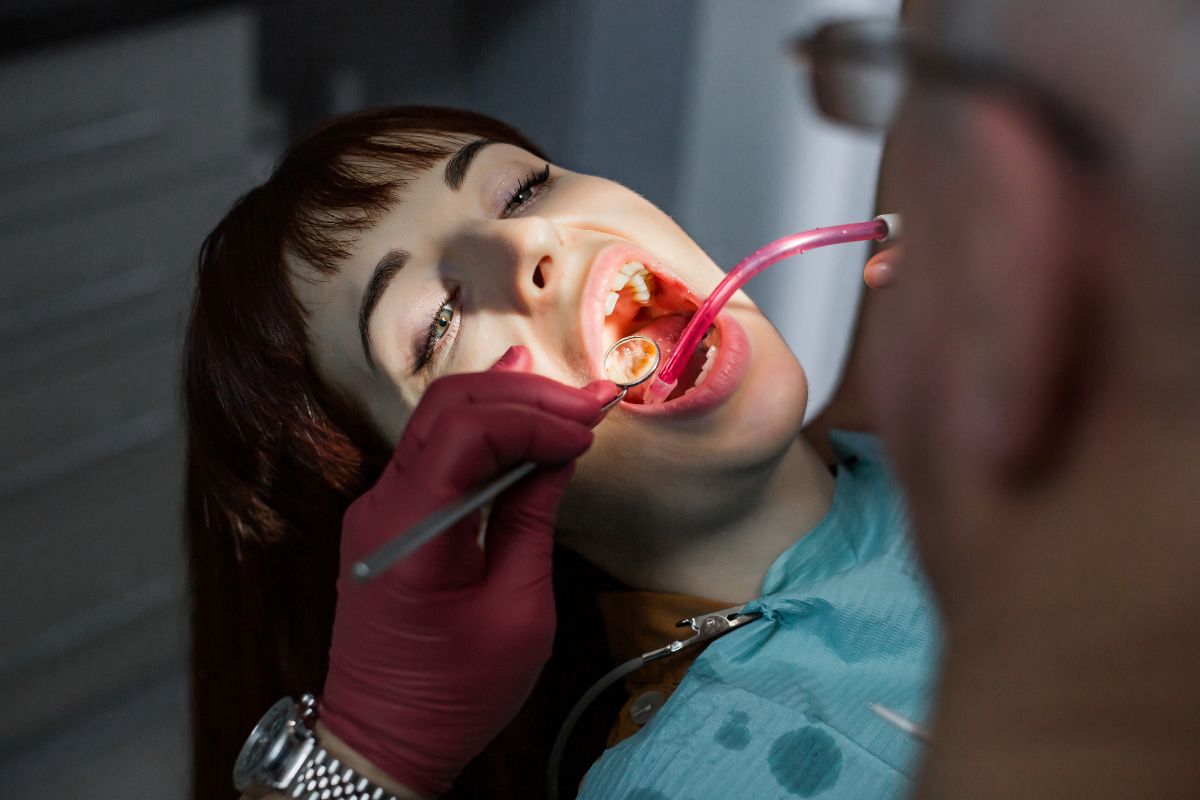
You notice something feels slightly off when you bite down, but there’s no real pain, so you move on. What you might not realize is that a hairline crack in your tooth one too small to see and too subtle to cause much discomfort can quietly work its way deeper over time until the entire tooth is at risk. At Gila Ridge Dental, serving Central Yuma, West Yuma, and the Foothills, Dr. Stephen Garner and Dr. Thor G. Thorson help patients understand a simple truth: when it comes to cracked teeth, “no pain” doesn’t mean “no problem.”
If you’ve ever brushed off a small crack or chip and moved on, this guide is for you. Understanding what actually happens inside a cracked tooth and why timing matters can make the difference between a simple repair and losing the tooth altogether.
What Is a Cracked Tooth, Exactly?
A cracked tooth isn’t always something you can see in the mirror. Cracks come in several forms, and some of the most damaging ones are also the least visible.
Here’s a quick breakdown of the types we commonly see:
Craze lines: Tiny surface cracks in the outer enamel. They’re usually cosmetic and don’t require treatment, but they can be an early warning that your tooth is under stress.
Fractured cusp: This happens when a piece of the chewing surface breaks off, often around an old filling. It can cause sharp pain when you bite down.
Cracked tooth: This is a crack that begins at the surface and moves downward toward the root. This type needs the most attention because it can progress quickly without obvious symptoms.
Split tooth: This is what happens when a cracked tooth goes untreated for too long. The tooth literally separates into two segments. At this point, saving the whole tooth is rarely possible.
Vertical root fracture: A crack that starts at the root and moves upward. These are often discovered late, because they produce few symptoms until infection sets in.
As trusted dental care providers in Yuma, we see all of these, and the ones that concern us most are the ones patients didn’t know they had.
Why a Crack Doesn’t Always Hurt Right Away
This is the part that catches most people off guard. A cracked tooth can sit quietly for weeks or even months before producing any noticeable pain.
Here’s why: your tooth has an outer layer of enamel, a middle layer called dentin, and a soft inner pulp that contains nerves and blood vessels. A crack that only reaches the enamel may cause no sensation at all. But as that crack deepens and approaches the pulp, the nerve becomes involved, and that’s when the discomfort starts.
Even then, the pain from a cracked tooth is often intermittent. You might feel a sharp twinge when you bite down on something hard, or a brief ache when you drink something cold. Then it goes away. So you wait, and you tell yourself it’s nothing.
That waiting is exactly what lets the crack spread.
The Real Timeline of an Untreated Crack
Early stage: The crack is small and contained. At this point, treatment is straightforward; often, a dental crown or a bonding procedure can stabilize the tooth and prevent further damage. Most patients walk out the same day.
Middle stage: The crack has reached the dentin. You may start noticing more consistent sensitivity, especially to temperature changes. Treatment is still possible, but it’s more involved. Depending on how deep the crack has gone, a root canal may now be necessary before placing a crown.
Late stage: The crack has reached or entered the pulp. Infection is either present or likely. Treatment becomes more complex, and in some cases, extraction is the only option left. This is also when patients often experience the kind of pain that sends them to the dentist in a hurry pain that could have been avoided months earlier.
The hard truth is that we regularly see patients who had a cracked tooth for a long time without knowing it, and by the time they came in, the tooth couldn’t be saved. That’s a difficult conversation to have, and it’s one we’d rather not have at all.
Common Causes of Cracked Teeth in Adults
If you’re wondering how a crack even happens, the answer is usually one (or a combination) of several everyday factors.
Biting down on hard foods: Ice, hard candy, popcorn kernels, and certain nuts are common culprits. These foods put sudden, concentrated pressure on specific teeth.
Grinding and clenching (bruxism): Many people grind their teeth at night without realizing it. Over time, this puts enormous cumulative stress on the enamel and can cause cracks to form gradually.
Large fillings: Older or oversized fillings can weaken the surrounding tooth structure, leaving it more vulnerable to cracking.
Temperature extremes: Repeatedly going from very hot to very cold foods or drinks causes slight expansion and contraction of the tooth. Over time, this can create or worsen cracks.
Trauma: A fall, a sports injury, or even biting down the wrong way on something unexpected can cause a crack to appear suddenly.
Age: As we get older, our teeth go through more wear and tear. Cracks become more common in people over 40, though they can happen at any age.
Signs That Your Tooth Might Be Cracked
Since cracked teeth don’t always send obvious signals, it’s important to know what to watch for. Here are some things worth mentioning to your dentist:
- A sharp, fleeting pain when you bite down, especially if it only happens on a specific tooth
- Sensitivity to sweet, hot, or cold foods that comes and goes
- Discomfort that’s hard to pinpoint; it moves around, or you can’t tell which tooth it’s coming from
- Pain that eases when you release pressure (a hallmark of cracked tooth syndrome)
- Swelling around a specific area of the gum
- A tooth that looks slightly off or feels rough against your tongue
None of these symptoms on their own confirm a crack, but together, they’re a reason to get checked. And remember, a crack can also be completely asymptomatic and only visible on a dental X-ray or under magnification during an exam.
How We Diagnose a Cracked Tooth
Diagnosing a cracked tooth takes more than a visual look. Some cracks are too small or too deep to see without the right tools.
A combination of methods can be used to determine what’s going on:
Visual exam with magnification: A close look at the tooth under a dental light, sometimes using a dye that makes cracks more visible.
Bite test: We ask you to bite down on a small instrument called a tooth sleuth. If you feel a sharp pain when you release pressure, that’s a strong indicator of a crack.
Dental X-rays: While X-rays don’t always show cracks directly, they can reveal bone loss, infection, or root involvement that suggests a crack has been progressing.
Probing: Examining the gum tissue and the root surface for signs that a crack has extended below the gumline.
The goal is to find the crack and assess exactly how far it’s gone because the treatment path depends entirely on that.
What Treatment Looks Like (and Why Earlier Is Better)
Treatment for a cracked tooth depends on the location, severity, and how far the crack has extended. Here’s the general range:
Dental bonding: For small, surface-level cracks, tooth-colored composite resin can be applied to seal the crack and restore the tooth’s appearance.
Dental crown: This is the most common treatment for a cracked tooth that hasn’t yet reached the pulp. A crown covers and protects the entire tooth, holding it together and preventing the crack from spreading further.
Root canal: When the crack has reached the pulp and caused infection or irreversible inflammation, a root canal is needed to remove the damaged tissue before placing a crown.
Extraction: When the crack extends below the gumline or splits the tooth at the root, extraction may be the only option. A dental implant or bridge can then replace the lost tooth.
Here’s what we want every patient to take away from this: a cracked tooth caught early almost always ends with the tooth being saved. A cracked tooth ignored for too long often doesn’t.
What Happens at Your First Visit for a Cracked Tooth
If you come in to our dental office concerned about a crack or even just a vague sensitivity that you can’t quite explain, here’s what you can expect.
We’ll start with a conversation. We want to hear what you’re experiencing, when it started, and which tooth feels off. From there, we’ll do a thorough exam using the diagnostic steps described above.
If we find a crack, we’ll walk you through exactly what we see, explain how far it’s progressed, and go over your treatment options clearly and honestly. There’s no pressure, no rush, and no judgment if it’s been a while since your last visit. We’re here to help you figure out the best path forward for that specific tooth.
Most of the time, patients feel relief just from knowing what they’re dealing with because uncertainty is usually worse than the answer itself. If you’re concerned about a cracked tooth or unexplained sensitivity, contact us to discuss your symptoms and find out what may be causing them.
A Note on Protecting Your Teeth Going Forward
Once a cracked tooth is treated, the goal is to make sure it doesn’t happen again or at least catch any new cracks early. A few simple habits go a long way:
Wear a night guard if you grind: If our dentists identify signs of bruxism during your exam, a custom night guard can protect your teeth from the cumulative damage that grinding causes overnight.
Avoid biting on hard objects: Ice is the one we mention most often. It’s hard, it’s cold, and it’s one of the most common causes of tooth cracks we see.
Keep up with routine exams: Many cracks are found during a routine checkup, before the patient even knows anything is wrong. Regular X-rays and clinical exams give us the chance to catch a small crack before it becomes a large problem.
Address old fillings: If you have a large, older filling, it may be time to evaluate whether a crown would offer better long-term protection for that tooth.
Keeping Your Smile Healthy and Intact – That’s What We’re Here For
A cracked tooth doesn’t have to mean a lost tooth. But the window for straightforward treatment narrows the longer you wait.
At our dental office, we are committed to helping every patient understand what’s happening in their mouth and what it means for their long-term health. We believe that an informed patient is an empowered one, and we’d rather spend a few extra minutes explaining your situation than have you leave with unanswered questions.
If you’ve been noticing a strange twinge when you bite, a sensitivity that comes and goes, or you simply haven’t had your teeth checked in a while, this is your sign to come in. Whether you visit our Central Yuma practice, our West Yuma practice, or our Foothills office, our team is ready to help you get ahead of any problems before they become harder to treat.