

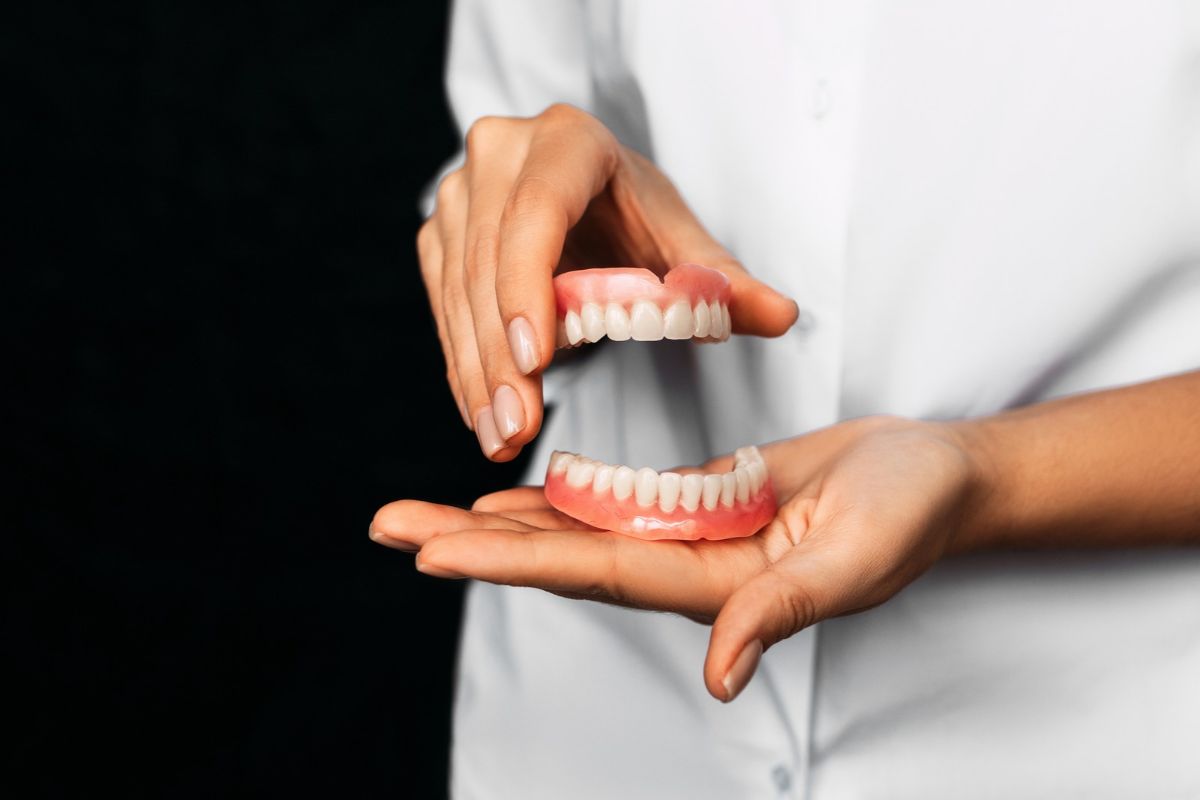
Dentures can help restore your smile and make everyday activities, such as eating and speaking, more comfortable. Like natural teeth, however, they need consistent care to stay clean and in good condition. Knowing how to clean dentures properly can help remove food particles, reduce plaque buildup, and minimize unpleasant odors.
Whether you wear full or partial dentures, a simple daily routine can make a difference. If you live in Yuma, AZ, and have questions about denture maintenance, Gila Ridge Dental’s denture services in Yuma can be a helpful starting point for exploring your care options.
In this guide, you’ll learn how to clean dentures safely, which products to use, what mistakes to avoid, and when to contact your dentist about changes in fit or comfort.
Quick Answer: How Do You Clean Dentures Properly?
To clean dentures, rinse them after meals, then gently brush all surfaces daily with a soft denture brush and a nonabrasive denture cleanser. Soak them in a denture-cleaning solution according to the product instructions, and rinse thoroughly before putting them back in your mouth. Avoid hot water and regular abrasive toothpaste.
Why Daily Denture Cleaning Matters
Dentures can collect food debris, plaque, and bacteria throughout the day. Without regular cleaning, deposits may contribute to bad breath, irritation, and inflammation of the tissues beneath the denture.
A consistent denture care routine also helps remove stains and food residue before they become more difficult to clean. Proper handling and storage can help protect the denture material from unnecessary damage.
Remember that dentures do not eliminate the need for oral hygiene. Your gums, tongue, palate, and any remaining natural teeth still need regular cleaning.
How to Clean Dentures Step by Step
1. Remove and Rinse Your Dentures
Start by carefully removing your dentures. Rinse them under cool or lukewarm running water to loosen food particles and other debris.
Handle your dentures gently, particularly when removing them over a sink. Placing a folded towel in the basin or filling it with water can help cushion an accidental drop.
2. Brush With a Soft Denture Brush
Use a toothbrush designed for dentures or another suitable soft-bristled brush. Apply a denture cleanser recommended for your specific appliance.
Gently clean every surface, including the areas that touch your gums and the grooves where food may collect. Avoid scrubbing aggressively, as excessive pressure can damage some denture materials.
Regular toothpaste is not always suitable for dentures because many formulas contain abrasives that can scratch their surfaces. Follow the care instructions provided by your dentist or denture manufacturer.
3. Soak Your Dentures Safely
Many dentures benefit from soaking in a denture-cleaning solution. Choose a product compatible with your appliance and follow its label directions, including the recommended soaking time.
Some products are designed for overnight soaking, while others require a shorter treatment period. Do not assume every cleanser is suitable for every type of denture, especially partial dentures containing metal components.
If you use a soaking solution, rinse your dentures thoroughly with water before reinserting them. Never put cleaning tablets or concentrated cleaning solutions directly into your mouth unless the product is specifically designed for that use.
4. Clean Your Mouth, Too
After removing your dentures, gently clean your gums, tongue, and palate with a soft toothbrush or an appropriate oral-cleaning aid.
If you have remaining natural teeth, brush them twice daily with fluoride toothpaste and clean between them every day. Partial denture wearers should pay particular attention to the natural teeth that support or sit next to their appliance.
Keeping your mouth clean helps maintain the health of the tissues that support your dentures.
5. Store Your Dentures Correctly
When your dentures are out of your mouth, store them according to your dentist’s instructions. Many removable dentures need to remain moist to help prevent them from drying out or changing shape.
Use clean water or a suitable denture-soaking solution, as directed for your appliance. Keep dentures away from hot water, which can distort their shape.
Most people are advised to remove dentures overnight to allow the oral tissues to rest. However, follow your dentist’s specific instructions if you have recently received dentures or have been told to wear them for a particular period.
Common Denture Cleaning Mistakes to Avoid
Even with good intentions, some cleaning habits can damage dentures or irritate your mouth.
- Using hot or boiling water: Heat can warp denture materials and affect the fit.
- Brushing with abrasive toothpaste: Some formulas can scratch the denture surface.
- Using household cleaners: Products such as bleach or general-purpose cleaners may damage the appliance or leave harmful residues. Avoid them unless your denture’s manufacturer and dental professional specifically approve the product.
- Skipping daily cleaning: Food debris and deposits can accumulate even when dentures look clean.
- Putting un-rinsed dentures back in your mouth: Cleaning solution residue may irritate oral tissues.
- Ignoring changes in fit: Loose, painful, or rubbing dentures may need professional evaluation rather than more vigorous cleaning.
When in doubt, check the manufacturer’s instructions or ask your dental team which cleaning products are appropriate for your specific dentures.
How to Clean Full Dentures vs. Partial Dentures
The basic cleaning routine is similar for both types, but some details differ.
Cleaning Full Dentures
Full dentures replace an entire arch of missing teeth. Remove and gently brush the complete appliance, including the surface that rests against your gums. Clean your gums and tongue separately before reinserting the dentures.
Cleaning Partial Dentures
Partial dentures replace some missing teeth while fitting around remaining natural teeth. Clean the artificial teeth, base, clasps, and other accessible surfaces carefully. Avoid bending or damaging the clasps during brushing.
If your partial dentures contain metal components, check that your chosen soaking solution is compatible with them. Some products can damage certain metals.
If you are unsure which appliance you have or how its design affects daily care, discuss the difference between full and partial dentures with your dental provider.
How Often Should You Clean Your Dentures?
A simple daily schedule can help you maintain good denture hygiene.
| When | What to do |
|---|---|
| After meals | Remove and rinse dentures when practical to clear food debris. |
| Morning | Clean your mouth and rinse your dentures before wearing them. |
| Evening | Remove and thoroughly brush your dentures using an appropriate cleanser. |
| Before bed | Store dentures as directed, often in water or a suitable soaking solution. |
| Regular dental visits | Have your mouth and denture fit checked as recommended. |
Daily cleaning is important even if you wear dentures only occasionally. Follow any additional instructions provided for your particular appliance.
When Should You See a Dentist About Your Dentures?
Cleaning helps maintain dentures, but it cannot correct every denture problem. Contact your dentist if your appliance becomes loose, starts rubbing your gums, develops cracks, or causes persistent discomfort.
You should also seek professional advice if you notice ongoing redness, sores, bleeding, or changes in the tissues beneath your dentures. Do not attempt to reshape the appliance yourself with household tools or adhesives.
Changes in your mouth over time can affect how dentures fit. Your dentist can assess the problem and determine whether an adjustment, repair, relining, or replacement may be appropriate.
For denture wearers in Yuma, AZ, routine dental visits provide an opportunity to discuss cleaning methods, appliance condition, and any concerns about comfort.
Frequently Asked Questions
Can I clean my dentures with regular toothpaste?
It is generally better to use a cleanser specifically intended for dentures. Many regular toothpastes contain abrasives that can scratch denture surfaces. Ask your dentist which product is suitable for your appliance.
Should I remove my dentures every night?
Many denture wearers are advised to remove their dentures overnight so their oral tissues can rest. Follow your dentist’s instructions, particularly after a new fitting or when specific wear instructions have been provided.
Can I soak my dentures in plain water?
Water can help keep many removable dentures moist when they are not being worn. However, water alone does not provide the same cleaning action as a suitable denture cleanser. Brush your dentures daily and follow the storage instructions for your appliance.
How do I remove stubborn stains from dentures?
Use a denture-compatible cleanser and follow its directions. Avoid scraping stains with sharp objects or using unapproved household products. If staining or deposits persist, ask your dentist about appropriate professional cleaning.
What should I do if my dentures smell bad even after cleaning?
Persistent odor may be related to deposits, inadequate cleaning, or an issue affecting your oral tissues or appliance. Continue gentle daily cleaning and arrange a dental evaluation if the odor persists, especially if you also have soreness or irritation.
Keep Your Dentures Clean and Your Smile Comfortable
Learning how to clean dentures properly is an important part of protecting your oral health and caring for your appliance. Rinse dentures after meals, brush them gently every day, use compatible cleaning products, and store them according to professional guidance. Just as importantly, keep your mouth clean and do not ignore changes in denture fit or comfort.
If you wear full or partial dentures and have questions about cleaning, maintenance, or fit, Gila Ridge Dental West can help you explore appropriate denture care options. Visit our website to learn more about available services and take the next step toward maintaining your smile.