You brush every morning, maybe every night too. You rinse with mouthwash. You’ve tried different toothpastes and chewed more gum, but the problem keeps coming back. If this sounds familiar, the frustrating truth is that your routine may not be the issue at all. Persistent bad breath, the kind that returns within an hour or two of brushing, is usually a sign of something happening deeper in your mouth that no toothbrush can reach.
This is one of the most common concerns we hear from patients at Gila Ridge Dental. People come in thinking they’re doing something wrong with their hygiene, but more often than not, the real cause is a buildup of bacteria below the gumline, exactly where brushing stops. In many of those cases, periodontal treatment is what finally makes the difference, not a new toothbrush or a stronger mouthwash.
Understanding why bad breath keeps coming back is the first step toward actually stopping it.
Why Brushing Has Its Limits?
A toothbrush is designed to clean the surfaces of your teeth. It does that job reasonably well. What it cannot do is clean between teeth thoroughly, reach below the gumline, or clear bacteria from the back of the tongue, and those are three of the most common places where odor-causing bacteria actually live.
When bacteria in the mouth break down food particles and dead cells, they release sulfur compounds as a byproduct. Those compounds are what create the unpleasant smell. If the bacteria are sitting in places your brush can’t reach, you can clean your teeth perfectly and still walk away with the same problem.
A few specific areas people tend to overlook:
Between the teeth: Flossing reaches here, but brushing alone does not. Bacteria and food debris that sit between teeth for hours produce the same sulfur compounds that create odor.
Below the gumline: This is the critical one. If there’s any gum inflammation or early gum disease, pockets form between the gum tissue and the teeth. Bacteria accumulate in those pockets, and they’re completely unreachable through regular home care.
The back of the tongue: The surface of the tongue, particularly toward the back, collects a thin film of bacteria and dead cells. Brushing your teeth doesn’t disturb this film at all, and it’s a significant source of odor for many people.
Dry areas in the mouth: Saliva plays a constant role in washing bacteria away. When saliva production is reduced from medications, mouth breathing, caffeine, or alcohol, bacteria multiply faster and odor builds up more quickly.
Once you understand where the bacteria are actually living, it becomes clearer why surface-level cleaning doesn’t always solve the problem.
How Gum Disease Creates Persistent Bad Breath?
Gum disease is behind a large portion of chronic bad breath cases, and it develops quietly, often without pain, until it’s been present for quite some time.
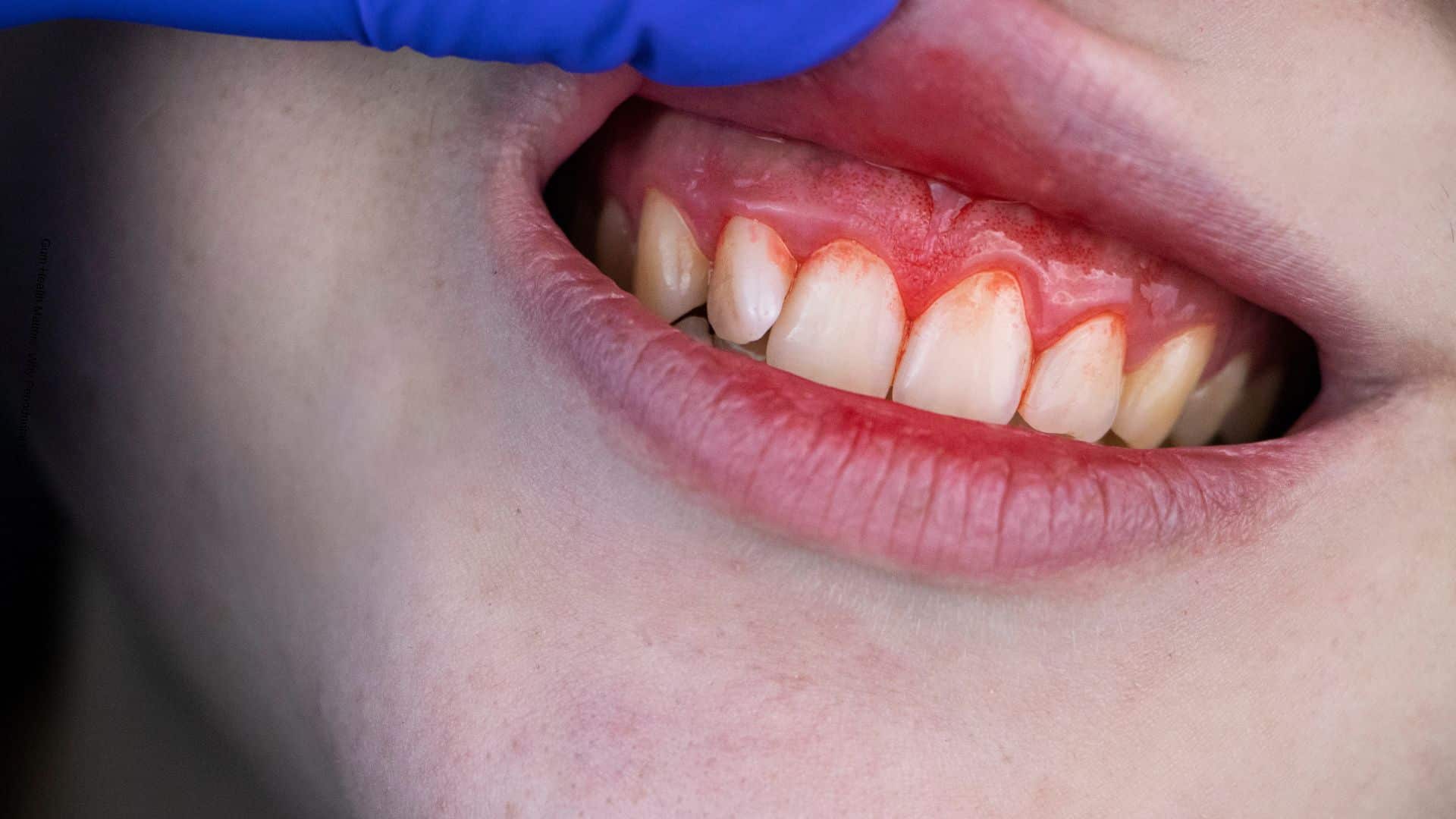
It begins as gingivitis. At this stage, plaque buildup along the gumline causes the gum tissue to become irritated and inflamed. The gums may bleed slightly when you brush or floss, look a little puffier than usual, or appear darker red near the edges. Many people notice this and assume it’s normal, or that they’re just brushing too hard. It’s not normal, and it’s worth paying attention to.
If gingivitis isn’t treated, it progresses into periodontitis. This is where the situation becomes more serious. The gum tissue begins to pull away from the teeth, forming small gaps between the gum and tooth root where bacteria collect. Because these pockets sit below the gumline in a low-oxygen environment, the bacteria that thrive there produce particularly potent sulfur compounds. The odor they generate is persistent, often described as stale or slightly metallic, and it doesn’t respond to mouthwash because the mouthwash simply can’t reach where the bacteria are living.
The deeper those pockets become, the harder it is to manage the situation through home care alone. And without professional treatment, the infection continues to progress, eventually affecting the bone that holds the teeth in place.
It’s also worth knowing that gum disease doesn’t stay isolated in the mouth. Research has consistently linked chronic gum infection to broader health concerns including cardiovascular disease, difficulty managing blood sugar in people with diabetes, and increased respiratory issues. The bacteria involved in periodontitis can enter the bloodstream through inflamed gum tissue and create inflammation elsewhere in the body. Treating gum disease, then, isn’t just about breath; it’s a meaningful part of looking after your overall health.
What Periodontal Treatment Involves?
For most patients, the starting point for treating gum disease is a procedure called scaling and root planing. This is often referred to as a deep cleaning, though it’s more precise than that description suggests.
During the procedure, a dental hygienist or dentist cleans the surfaces of the tooth roots below the gumline, removing hardened bacterial deposits called calculus that have accumulated in the gum pockets. Local anesthetic is used, so the process is comfortable. The goal is to remove the bacteria and deposits that are driving the infection, allow the gum tissue to heal, and reduce the depth of those pockets over time.
Most patients notice improvement within one to two weeks. The gums become less inflamed, the pockets begin to close, and the bacterial environment that was producing the odor is disrupted. For many people, this single course of treatment resolves their chronic bad breath when nothing else had.
After treatment, more frequent professional cleanings are typically recommended, usually every three to four months rather than every six. This isn’t because something went wrong. It’s because the bacteria that cause gum disease recolonize the treated areas relatively quickly, and staying on a tighter schedule prevents them from re-establishing at the same depth.
In cases where the disease has progressed further, additional steps may be needed. Localized antibiotics can be placed directly into the pockets. More advanced bone or tissue involvement may require a referral to a periodontist for surgical options. However, most patients who present when the condition is still moderate do well with non-surgical treatment.
Other Causes Worth Ruling Out
While gum disease accounts for the majority of persistent bad breath, a few other possibilities are worth understanding.
Post-nasal drip: Sinus infections, seasonal allergies, and chronic nasal congestion can cause mucus to drain down the back of the throat. That mucus carries bacteria, and it creates an odor that has nothing to do with your teeth or gums. If your bad breath is accompanied by a feeling of drainage, congestion, or frequent throat clearing, your sinuses may be contributing.
Acid reflux: Gastroesophageal reflux allows stomach acid and partially digested food to back up into the esophagus. The resulting odor comes from the stomach, not the mouth, and no amount of brushing will address it. If you experience heartburn, bloating, or a sour taste regularly, it’s worth discussing with your doctor.
Tonsil stones: Small, calcium-containing deposits can form in the natural folds of the tonsils. They’re common and often harmless, but they produce a noticeably strong odor. If you’ve had your gum health evaluated and everything looks fine, tonsil stones are worth looking into.
Certain medications: Dozens of medications reduce saliva production as a side effect, including many antihistamines, antidepressants, blood pressure medications, and diuretics. A dry mouth is a direct path to faster bacterial growth and more persistent odor. Staying well hydrated and discussing alternatives with your prescribing doctor can help.
Estimates vary, but research suggests that somewhere between 80 and 90 percent of persistent bad breath originates in the mouth, most commonly from gum disease or tongue bacteria. If gum health is ruled out and the bad breath persists, looking at other sources makes sense.
Practical Steps That Actually Help at Home
Home care can’t replace professional treatment when gum disease is present, but it does make a meaningful difference in managing bacteria day to day. These are habits worth building regardless of where your breath stands right now.
Use an electric toothbrush: Clinical studies consistently show they remove more plaque than manual brushing. The oscillating motion reaches into spaces and along the gumline more effectively than a back-and-forth manual stroke.
Floss properly, not just routinely: Most people floss by snapping the floss down between teeth and pulling it back up. The more effective technique is to curve the floss around each tooth in a C-shape, guiding it gently just below the gumline before sliding it back out. It takes the same amount of time but removes significantly more.
Add a tongue scraper to your morning routine: This is one of the highest-impact, lowest-effort changes you can make. A dedicated scraper removes the bacterial film from the back of the tongue far more effectively than a toothbrush does. The difference in breath quality is often noticeable within a few days.
Drink water consistently: Not just a glass in the morning, but water throughout the day. It keeps saliva production supported and washes bacteria away before they can accumulate to the point of producing odor.
Limit alcohol and tobacco: Both significantly reduce saliva flow. Tobacco use also directly damages gum tissue and is one of the strongest independent risk factors for developing and worsening gum disease. It also suppresses the visible signs of gum disease like bleeding, which can delay a person from realizing they need professional care.
Signs It’s Time to See Someone
Because gum disease rarely causes pain in its earlier stages, most people don’t realize they have it. These are the signals worth taking seriously:
- Bad breath that comes back consistently within an hour or two of brushing, even when you haven’t eaten
- Gums that bleed when you brush or floss, even occasionally
- Gums that look swollen, darker than usual, or that seem to be receding from your teeth
- A persistent bad taste in your mouth unrelated to food
- Teeth that feel slightly loose, or that seem to have shifted position
- Increased sensitivity near the gumline on specific teeth
None of these are normal parts of having teeth. They’re signals that something is happening below the surface that needs attention. The earlier it’s addressed, the simpler the treatment tends to be. Contact us to schedule an evaluation before the condition has a chance to progress.
Keeping Your Breath Fresh and Your Gums Healthy for the Long Term
Persistent bad breath is frustrating, but it’s rarely unexplainable. In most cases, there’s a clear reason and a clear path to addressing it. The key is understanding that brushing and rinsing are maintenance tools, not treatment. When bacteria have established themselves below the gumline, the solution has to go deeper than your toothbrush can reach.
For residents across Yuma, AZ, getting that evaluation doesn’t have to be complicated. We have three conveniently located offices in Central Yuma, West Yuma, and the Foothills, so there’s always a location close to where you live or work. A trusted dentist can assess what’s actually going on with your gum health, explain your options clearly, and help you move forward with a plan that addresses the root cause rather than masking the symptom.
.